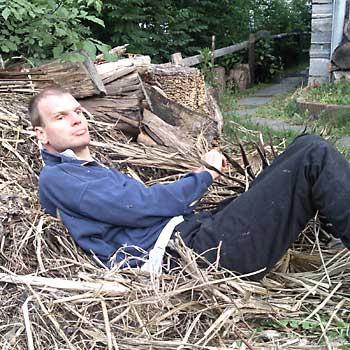
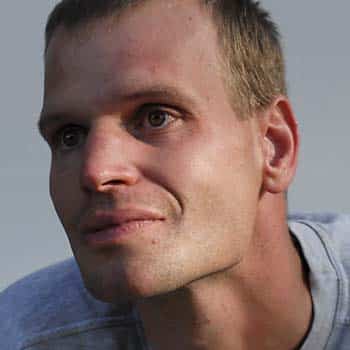
Lukas was present during the early days of the Center for Disorders of Perception. At that time, there was no residential school program. He received regular therapy at the center only until he started at the special education school in Weinfelden. During these years, Lukas, deeply withdrawn, went along with everything, such as long family hikes that lasted for hours. Since Lukas had been a poor sleeper from birth, requiring us to get up multiple times each night, we decided to move to Glarus and, at the age of 10, started a weekly boarding program. This change allowed us more space to support our healthy children.
Changes in caregivers and the attempt to support Lukas’s rapidly growing, weak back with a plaster corset triggered periods of intense anxiety. During these phases, he would complain for weeks and could not sleep, even with medication. Joyful laughter disappeared entirely. Despite sleepless nights, work and family demanded our full attention. Looking back, we marvel at the patience of his healthy siblings, who supported and endured Lukas with remarkable resilience. What a celebration it was when, after surviving a crisis, Lukas laughed again for the first time. The frequent transitions between the residential home and home increasingly frightened him. As a result, Lukas sometimes refused to get into the car for hours. No tricks or coaxing helped! This phase coincided with summer holidays in the Engadin, and every car outing became a family ordeal. Would Lukas finally get in, or would he rather walk for an hour to the next village? This meant long waits for his healthy siblings. Separate programs helped ease the situation. Lukas refused to ride cable cars, even though he really wanted to. Years later, I was able, through intensive physical support along his back, to gently guide him into a gondola. The fear was enormous—but even greater was the pride after a successful ride! His proud laughter accompanied us the entire day.
Between the ages of 16 and 20, constant over- and under-stimulation escalated Lukas’s aggression. Hitting, pinching until someone bled, raging, and smashing glass doors and windows made daily life extremely challenging. During long walks, sometimes guided or accompanied by singing, he could calm down briefly. Yet, during these walks, in his anger, he would tear his clothes off. One Saturday afternoon at the indoor pool with all the children, Lukas slapped another mother hard across the face. The result was an almost empty pool for our family. At that moment, all we wanted was to hide in a mouse hole!
Despite annual consultations at the Center for Disorders of perception, Lukas’s development stagnated and he risked being completely overwhelmed by increasingly severe bouts of fear and aggression. During a short stay at the center, he became so uncontrollably agitated that he was sedated with medication. Allegedly manageable afterward, he returned home. Plunged into profound fear, he allowed no one close. He complained and flailed his hands day and night, waking us from bed every fifteen minutes until we were exhausted. After discontinuing all medication, it gradually became possible with a great deal of attention, singing, and hours-long walks (Lukas could not tolerate enclosed spaces in his fear), to lead him out of his unbearable anxiety over the course of eight weeks. Life at the residential home and at home had become unsustainable. Only our relocation to St. Gallen made it possible for him to join the adult group at Tandem. This move likely saved Lukas from the near-complete erosion of his personality that might have occurred in a psychiatric hospital. For his siblings, all of whom were in secondary school or studying, the relocation was a difficult blow. At first, some of them rebelled strongly. In retrospect, however, they all agree that the move to St. Gallen ultimately had a positive impact on them as well.
Despite careful preparation for Lukas’s move and trial week at Tandem, it triggered another intense phase of fear for him. Once again, we spent weeks walking with him day and night, both inside the house and around the neighborhood. Nothing but crying and flailing! Would Lukas be able to manage at Tandem?
We let Lukas feel: “We notice that you are not feeling well. We are here with you. This will pass.”
A structured framework, created through careful coordination between home and residential care, provides him with security and has reduced his anxiety.
Intensive guided therapy while solving everyday problems helps him better perceive and understand his environment. Experiencing success often makes him genuinely happy and strongly promotes his language comprehension. Training in his own body language helps him communicate more clearly—for example, he begins to wave when I chat too long with a neighbor during a walk, or he leads his father to the fridge to show him the sausage. In the morning, he puts the stopper in the bathtub, runs the water, comes to get me from bed, leads me to the bathroom, and nods enthusiastically!
The small family-like group provides the ideal setting for all of this.
Despite his ongoing dependence, Lukas has become a cheerful and happy personality who continues to learn and absorb new things, but he still urgently needs this skilled, safe, and structured environment. He can once again be genuinely happy and laugh from the depths of his soul. He is learning, instead of having outbursts when tension rises, to take someone by the hand and show what he wants. He is beginning to seek his own solutions to problems. Meanwhile, all the children have grown up and moved out. When they come home, they are disappointed if Lukas isn’t there. For Lukas, seeing one of his siblings is always a joyful experience. He pulls them onto the couch beside him so they can sing and chat together. Lukas has grown into a personality who can live his full, self-determined life. He is not only “tolerable” to those around him, he has become a true enrichment to his family and community.